Ask most training institute owners what their biggest marketing problem is and you’ll hear the same answer: “We need more leads.” Look at their enquiry data and a different picture appears. Plenty of enquiries come in. What breaks is follow-up for training institutes — what happens in the hours and days after someone fills a form or sends a WhatsApp message.
This guide walks through why enquiries go cold and a simple follow-up system any counselling team can run, with or without a CRM.
Where enquiries actually leak
In almost every institute I’ve worked with, the leaks show up in the same four places:
- Slow first response. The enquiry lands at 7:30 pm, and the counsellor calls the next afternoon. By then the student has already spoken to two other institutes.
- One call, then silence. The first call goes unanswered or the student says “I’ll think about it”, and nobody calls again.
- No owner. Leads sit in a WhatsApp group or an Excel file that three people look at, so everyone assumes someone else followed up.
- No record of what was said. When the student finally calls back, the counsellor doesn’t know the course, the batch or the objection from the first conversation.
None of these are ad problems. More ad spend just pushes more enquiries into the same leaky process.
Step 1: Respond in minutes, not hours
The single biggest improvement for most institutes is response time. The student enquired because they were thinking about the course right now. Every hour you wait, that intent cools and competitors get a chance.
A practical setup:
- An instant WhatsApp acknowledgement (“Hi Priya, thanks for your interest in the Full-Stack batch. Our counsellor will call you in the next few minutes.”).
- A counsellor call within minutes during working hours.
- For enquiries that come in after hours, a scheduled call first thing the next morning — before new enquiries arrive.
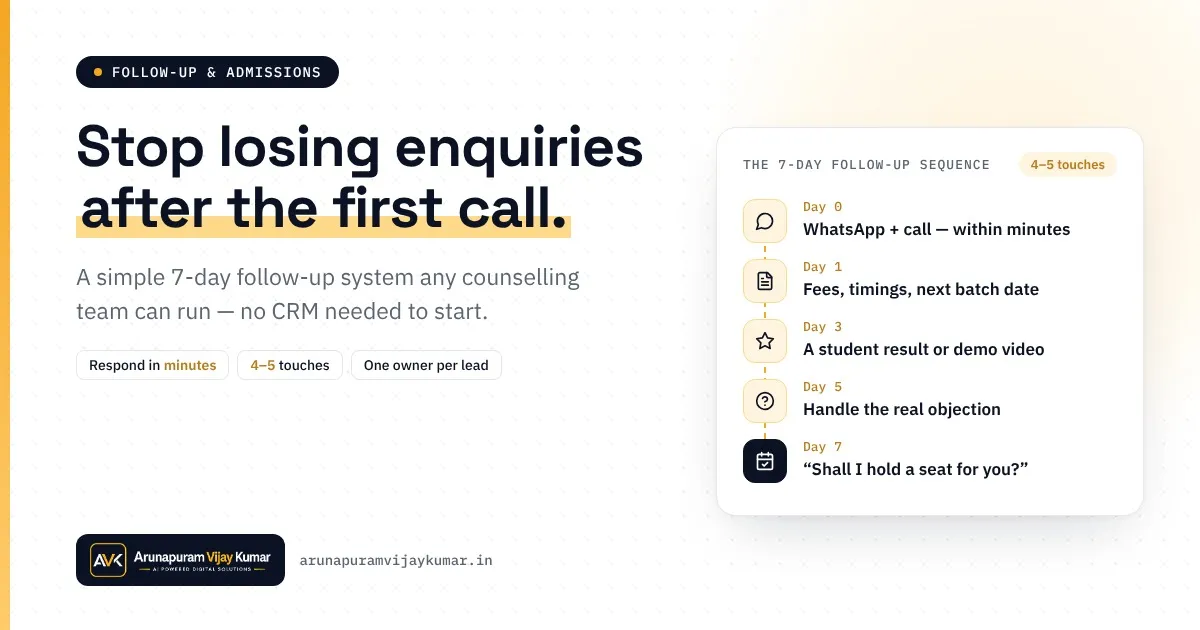
Step 2: A 7-day follow-up sequence
One unanswered call is not follow-up. Students compare institutes, talk to parents and wait for salary dates. A simple sequence keeps you in the conversation without being pushy:
| Day | Touch | Purpose |
|---|---|---|
| Day 0 | WhatsApp + call | Acknowledge, understand the goal, book a demo or counselling slot |
| Day 1 | Call (if not reached) or WhatsApp with batch details | Share fees, timings, next batch date |
| Day 3 | WhatsApp: a student result, placement story or demo video | Build trust |
| Day 5 | Call | Handle the real objection: fees, timing, parents, comparison |
| Day 7 | Final WhatsApp with a clear next step | “Seats for the 15th batch close Friday — should I hold one?” |
After day 7, move the lead to a monthly nurture list instead of deleting it. Many admissions come from people who enquired for an earlier batch.
Step 3: Give every enquiry an owner, a status and a next date
This is the part that turns follow-up from “when we remember” into a system. Every enquiry needs three fields:
- Owner — one named counsellor.
- Status — New, Contacted, Demo booked, Admitted, Not interested.
- Next follow-up date — the day the next touch is due.
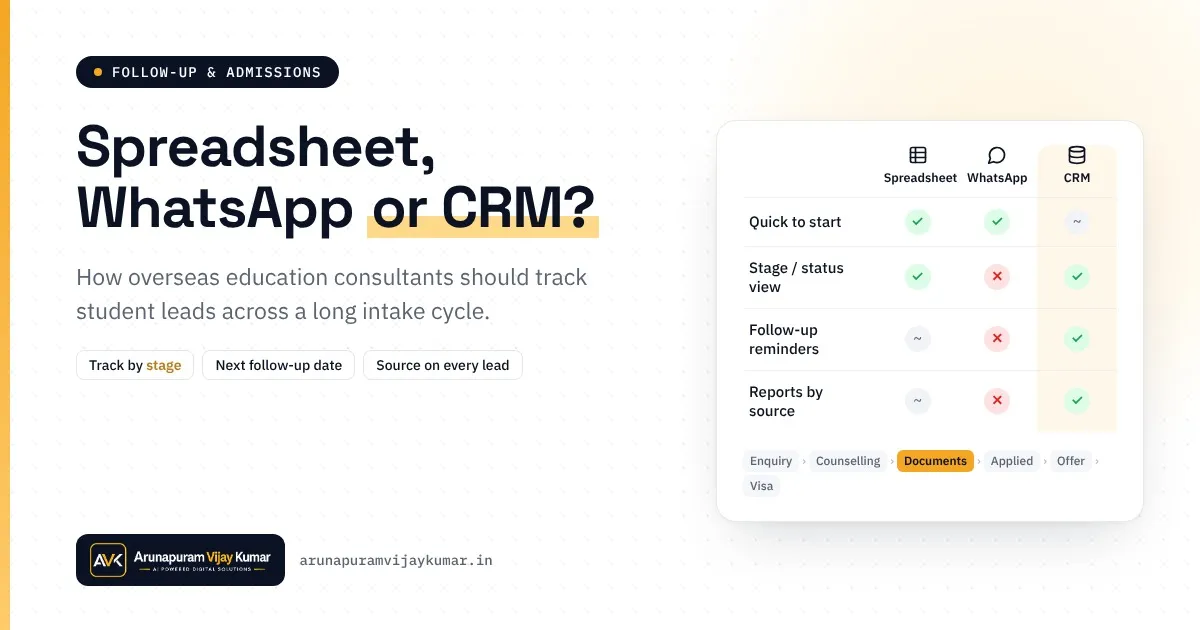
Each morning, the counsellor filters by today’s date and works the list. That alone fixes most of the “we forgot to call back” problem — and it works in a shared Google Sheet before you ever buy a CRM.
Handling the objections you hear every week
Follow-up calls go better when counsellors are ready for the same handful of objections. Write short, honest answers for each and keep them next to the lead sheet:
- “The fees are high.” Break the fee into monthly or per-class terms, explain what’s included (projects, mock interviews, placement support) and mention instalment options if you offer them.
- “I need to ask my parents.” Offer a short call or demo with the parent. In many families the parent is the real decision-maker.
- “I’m comparing with another institute.” Don’t criticise them. Ask what matters most — trainer, timing, placements — and show proof on that point.
- “The timing doesn’t suit me.” Check upcoming batches, weekend or online options before letting the lead go.
Record the objection in the notes field. Over a month, these notes tell you more about your offer than any ad report.
Write the WhatsApp messages once, reuse them daily
Counsellors are busy, and typing every message from scratch is where follow-up gets skipped. Create five or six saved replies in WhatsApp Business: the instant acknowledgement, batch details with fees and dates, a demo invitation, a student result or review, and the final “should I hold a seat?” message. Personalise the name and course, keep everything else consistent. Consistency is what makes follow-up happen on busy days, not just quiet ones.
Step 4: Measure follow-up, not just leads
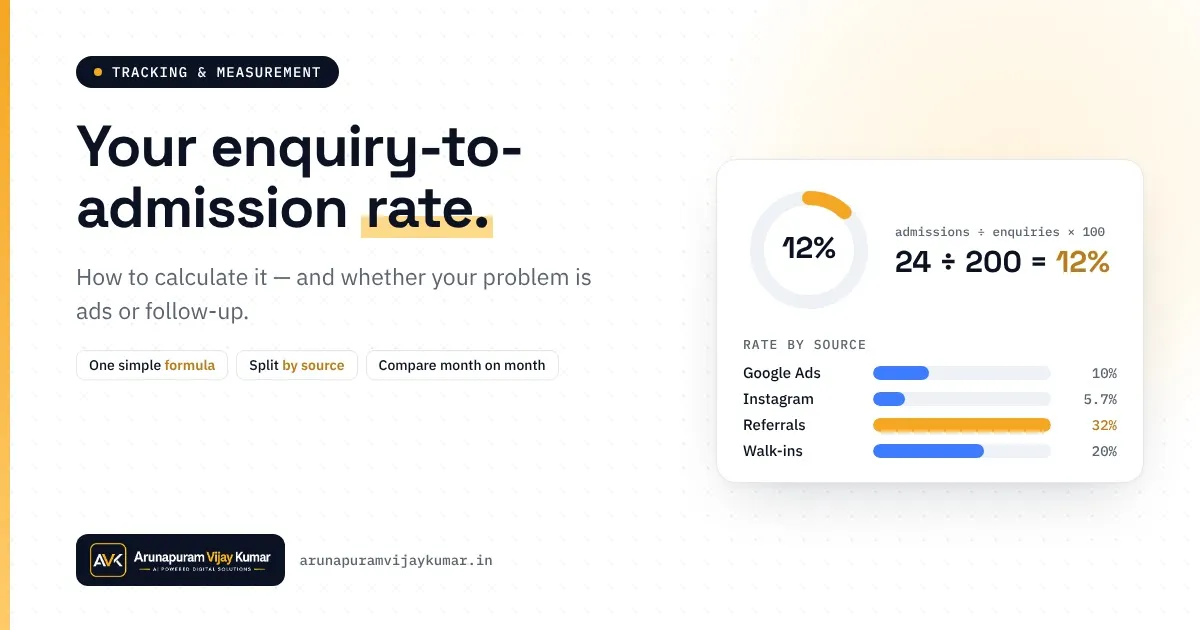
Track two numbers every month: how many enquiries came in, and how many became admissions. The ratio between them — your enquiry-to-admission rate — tells you where to spend effort. If enquiries are healthy but admissions are low, the fix is follow-up and counselling, not more ads.
Want to see how your institute does on response time, follow-up and tracking? The free Business Growth Audit scores all of it in five minutes and names your two biggest gaps.
What this looks like when it’s automated
Once the process works manually, automation makes it consistent: instant WhatsApp replies, reminders for due follow-ups, and a dashboard showing which campaign each admission came from. That’s the core of the Growth System I build for institutes — but the process comes first. Automating a broken follow-up process only makes it fail faster.
Frequently asked questions
How quickly should a training institute respond to a new enquiry?
As fast as you realistically can — ideally within a few minutes during working hours. The person enquired because they were thinking about the course right then. A quick WhatsApp acknowledgement followed by a call works well for most institutes.
How many times should a counsellor follow up before giving up?
Plan for at least four to five touches over about seven days, mixing calls and WhatsApp messages. Many students decide only after talking to parents or comparing two or three institutes, so a single call is rarely enough.
Do we need a CRM to fix follow-up?
Not on day one. A shared sheet with an owner, status and next follow-up date for every enquiry fixes most leaks. A CRM becomes worth it when volume grows and you need automatic reminders and reports.